
Crypto arbitrage and futures, no fluff
Practical guides on funding, margin, liquidation, API key security and automation. Content for people who want to understand before they trade.
Start here

What Is Crypto Arbitrage and How Does It Work?
Crypto arbitrage explained: what it is, the three most common types (price, funding and triangular) and the risks to know before you start.
3 min read
What Are Perpetual Contracts (Perpetual Futures)?
Perpetual contracts in plain language: what they are, how they differ from futures with an expiry date and why the funding rate exists.
3 min read
Long and Short: A Beginner's Guide to Crypto Futures
What being long and short means in crypto futures, how each position gains or loses, and how the two combine in funding arbitrage.
3 min readFundamentals
The basics of futures, perpetual contracts, leverage, margin and execution, explained without rush.
What Is Crypto Arbitrage and How Does It Work?
Crypto arbitrage explained: what it is, the three most common types (price, funding and triangular) and the risks to know before you start.
3 min readWhat Are Perpetual Contracts (Perpetual Futures)?
Perpetual contracts in plain language: what they are, how they differ from futures with an expiry date and why the funding rate exists.
3 min readLong and Short: A Beginner's Guide to Crypto Futures
What being long and short means in crypto futures, how each position gains or loses, and how the two combine in funding arbitrage.
3 min readFunding
Everything about the funding rate: how it is calculated, intervals, negative funding and how to take advantage of it.

Positive vs Negative Funding Rate: What It Means
When the funding rate is positive or negative, who pays and who receives, and how that shows up in arbitrage opportunities between exchanges.
3 min read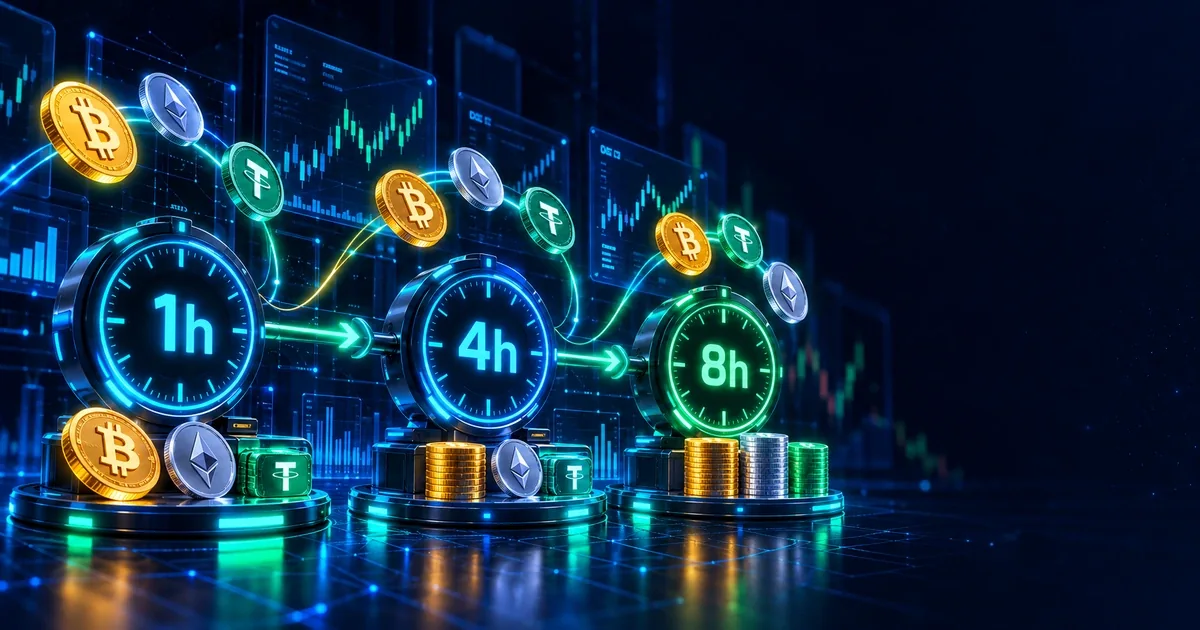
Funding Intervals: 1h, 4h or 8h Explained
Why funding is paid at different intervals across exchanges and coins, and how that changes the math of an arbitrage between them.
3 min read
How to Calculate Funding Arbitrage Profit
Step-by-step guide to calculating the net result of a funding arbitrage: funding received, fees, spread and opportunity cost, with an example.
3 min readSecurity
API keys, 2FA, common scams and how to protect your money when using bots.

How to Create an API Key Without Withdrawal Permission
A general step-by-step guide to creating an exchange API key with read and trade access only, no withdrawals, plus tips for storing and revoking it.
3 min read
7 Common Crypto Bot Scams and How to Avoid Them
The most common scams involving crypto bots, signals and arbitrage, with warning signs and a checklist to protect yourself before sharing your API key.
3 min read
API IP Whitelist: What It Is and When to Use It
An IP whitelist limits where an API key can be used. Learn how it works, what to watch out for and why it helps protect your exchange account.
3 min readExchanges
What to look for in exchanges and how to get ready to trade futures.
Best Exchanges for Funding Rate Arbitrage
Criteria for choosing exchanges for funding rate arbitrage: liquidity, futures API, fees, margin mode and which exchanges Multi Arbitrage monitors.
3 min read
How to Open a Bitget Account and Get Ready for Futures
A step-by-step guide to opening a Bitget account, setting up security, moving USDT to the futures wallet and creating an API key without withdrawals.
2 min read
How to Open an XT.com Account and Get Ready for Futures
A general guide to opening an XT.com account, securing it, depositing USDT into futures and creating an API key with read and trade access only.
2 min readStrategy and risk
Real risks, capital management and a comparison of arbitrage strategies.
Funding Rate Arbitrage Risks: 8 Real Risks to Know
Funding rate arbitrage is not risk-free. See 8 real risks (execution, liquidation, funding that flips, exchange risk and more) and how to reduce each.
3 min read
Risk Management for Crypto Futures Traders
Practical risk management rules for futures: position size, leverage, isolated margin, stops, diversification and a loss limit.
2 min read
How to Calculate the Liquidation Price of a Position
A simplified formula to estimate the liquidation price of a long and a short on isolated margin, with a numerical example and things to watch for.
3 min readMulti Arbitrage
How the bot, the Prospector, credits and the affiliate program work.

How a Funding Rate Arbitrage Bot Works, Step by Step
From sign-up to exit: see how the Multi Arbitrage bot picks the coin, opens both legs, protects the position and records the result of each trade.
3 min read
Prospector: How the Bot Picks the Coin to Trade
Multi Arbitrage’s Prospector filters coins by payment history, volume, price range and BTC correlation. See how it works and what the profiles are.
2 min read
Affiliate Program: How to Refer and Earn Commission
How the Multi Arbitrage affiliate program works: a 10% to 20% commission on referrals’ top-ups, weekly USDT payouts, plus the rules and limits.
2 min readAll articles
What Is Crypto Arbitrage and How Does It Work?
Crypto arbitrage explained: what it is, the three most common types (price, funding and triangular) and the risks to know before you start.
3 min readWhat Are Perpetual Contracts (Perpetual Futures)?
Perpetual contracts in plain language: what they are, how they differ from futures with an expiry date and why the funding rate exists.
3 min readLong and Short: A Beginner's Guide to Crypto Futures
What being long and short means in crypto futures, how each position gains or loses, and how the two combine in funding arbitrage.
3 min read
What Is Leverage in Crypto and How Does It Work?
Leverage multiplies gains and losses. Learn how it works, how it relates to liquidation and how to choose a safer level.
2 min read
Isolated vs Cross Margin: Which One to Choose
Isolated margin separates the risk of each position; cross uses your whole balance. Learn the difference and why isolated suits arbitrage.
2 min read
What Is Spread and Why It Matters in Arbitrage
Spread is the gap between the buy and sell price. See how it affects the cost of entering and exiting an arbitrage trade.
3 min read
Maker vs Taker Fees: How They Affect Your Profit
Learn the difference between maker and taker fees on crypto exchanges, when each one is charged and how they change the result of an arbitrage trade.
3 min read
Order Book and IOC Orders: How Execution Works
What the order book is, how it sets your execution price and why an IOC order protects your entry price in arbitrage trades.
3 min readPositive vs Negative Funding Rate: What It Means
When the funding rate is positive or negative, who pays and who receives, and how that shows up in arbitrage opportunities between exchanges.
3 min readFunding Intervals: 1h, 4h or 8h Explained
Why funding is paid at different intervals across exchanges and coins, and how that changes the math of an arbitrage between them.
3 min readHow to Calculate Funding Arbitrage Profit
Step-by-step guide to calculating the net result of a funding arbitrage: funding received, fees, spread and opportunity cost, with an example.
3 min read
High Funding Rate: Opportunity or Trap?
A very high funding rate grabs attention but can hide risk. See the warning signs: low liquidity, volatility, spread and funding that disappears.
2 min read
Mark Price vs Index Price and the Funding Rate Explained
Learn the three prices of a perpetual contract (last, mark and index), what each one is for and how they affect the funding rate and liquidation.
3 min readHow to Create an API Key Without Withdrawal Permission
A general step-by-step guide to creating an exchange API key with read and trade access only, no withdrawals, plus tips for storing and revoking it.
3 min read7 Common Crypto Bot Scams and How to Avoid Them
The most common scams involving crypto bots, signals and arbitrage, with warning signs and a checklist to protect yourself before sharing your API key.
3 min readAPI IP Whitelist: What It Is and When to Use It
An IP whitelist limits where an API key can be used. Learn how it works, what to watch out for and why it helps protect your exchange account.
3 min read
Two-Factor Authentication (2FA) on Crypto Exchanges
How to turn on 2FA on a crypto exchange, which method to use (authenticator app or SMS), how to store recovery codes and what to avoid.
2 min read
How to Know if a Crypto Exchange Is Trustworthy
A checklist for evaluating a crypto exchange: track record, liquidity, security, transparency, support and warning signs to check before you deposit.
2 min readBest Exchanges for Funding Rate Arbitrage
Criteria for choosing exchanges for funding rate arbitrage: liquidity, futures API, fees, margin mode and which exchanges Multi Arbitrage monitors.
3 min readHow to Open a Bitget Account and Get Ready for Futures
A step-by-step guide to opening a Bitget account, setting up security, moving USDT to the futures wallet and creating an API key without withdrawals.
2 min readHow to Open an XT.com Account and Get Ready for Futures
A general guide to opening an XT.com account, securing it, depositing USDT into futures and creating an API key with read and trade access only.
2 min read
BingX Futures: What to Check Before You Trade
What to check on BingX before using futures and bots: minimum order size, position mode, isolated margin, API key and your first tests.
2 min read
Phemex Futures for Beginners: What to Know
A guide for using Phemex for futures: security, position mode, API key without withdrawals, how conditional orders work and your first tests.
2 min read
MEXC Futures API Trading: What to Check
MEXC has restricted futures orders through its API. See what to check today, how hedge mode works and MEXC’s status on Multi Arbitrage.
2 min readFunding Rate Arbitrage Risks: 8 Real Risks to Know
Funding rate arbitrage is not risk-free. See 8 real risks (execution, liquidation, funding that flips, exchange risk and more) and how to reduce each.
3 min readRisk Management for Crypto Futures Traders
Practical risk management rules for futures: position size, leverage, isolated margin, stops, diversification and a loss limit.
2 min readHow to Calculate the Liquidation Price of a Position
A simplified formula to estimate the liquidation price of a long and a short on isolated margin, with a numerical example and things to watch for.
3 min read
How Much Capital Do You Need to Start Arbitrage
How much money you need to start funding rate arbitrage: margin on both exchanges, minimum order sizes, fees and an example with real numbers.
2 min read
Price Arbitrage vs Funding Rate Arbitrage Compared
Compare price arbitrage (spot or futures) with funding rate arbitrage: how each one earns, their costs and risks, and which fits your profile best.
2 min read
Funding Day Trade vs Funding Scalp: Which to Choose
Differences between Multi Arbitrage’s Funding Day Trade and Funding Scalp: entry window, duration, minimum profit, risk and who each one is for.
2 min readHow a Funding Rate Arbitrage Bot Works, Step by Step
From sign-up to exit: see how the Multi Arbitrage bot picks the coin, opens both legs, protects the position and records the result of each trade.
3 min readProspector: How the Bot Picks the Coin to Trade
Multi Arbitrage’s Prospector filters coins by payment history, volume, price range and BTC correlation. See how it works and what the profiles are.
2 min readAffiliate Program: How to Refer and Earn Commission
How the Multi Arbitrage affiliate program works: a 10% to 20% commission on referrals’ top-ups, weekly USDT payouts, plus the rules and limits.
2 min read
Credits and Pricing: The 30% of Profit Explained
Questions and answers on Multi Arbitrage pricing: prepaid credits, 30% of profit, how losses are handled and what happens when your credits run out.
2 min read
Crypto Arbitrage and Futures Glossary
A glossary of key terms in arbitrage, perpetual futures and API security: funding rate, long, short, spread, margin, liquidation, IOC and more.
3 min readReady to put it into practice?
Create your account, connect your exchanges with keys that can't withdraw and start with $30 in credits.
Create my account →This content is for information only and is not investment advice. Trading crypto derivatives involves a high risk, including the total loss of your capital. Past results do not guarantee future results, and the figures mentioned are examples. Before trading, check whether trading crypto derivatives is allowed in your country and what your tax obligations are. Assess whether the product suits your profile before investing.