How to Calculate the Liquidation Price of a Position
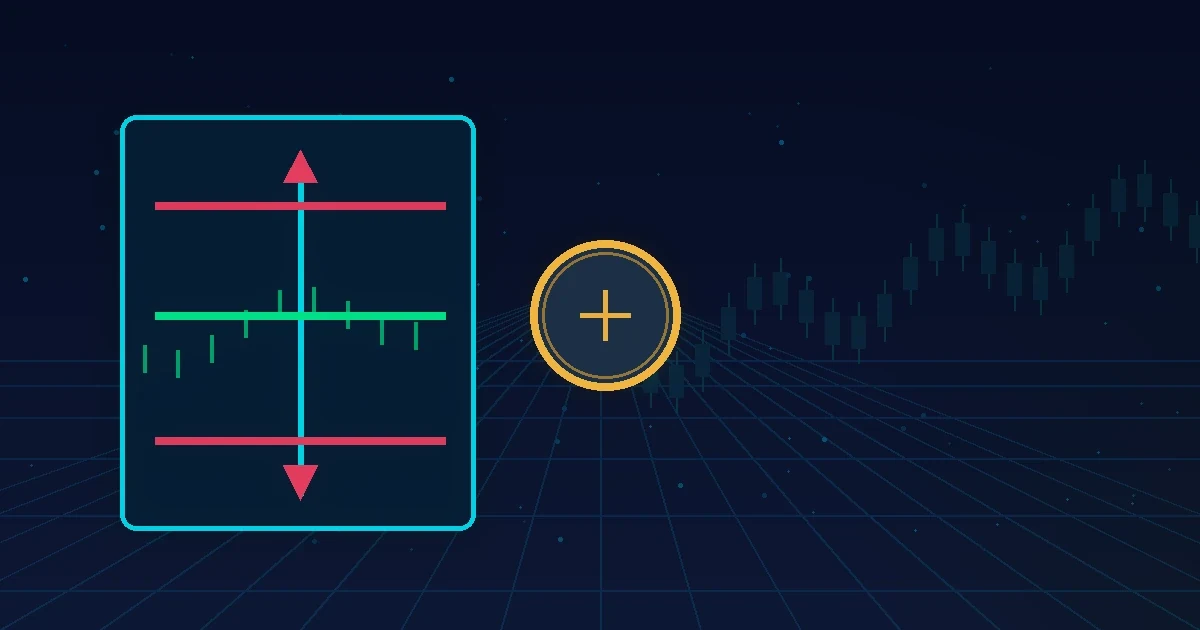
Knowing the price at which your position will be liquidated is the most important piece of information before you enter. The exchange shows this number, but understanding how it comes about helps you choose leverage and avoid surprises.
The general idea
On isolated margin, the position is liquidated when the unrealized loss consumes the margin, minus a small amount the exchange keeps as a safety buffer, called the maintenance margin. The higher the leverage, the smaller the margin and the closer liquidation gets.
Simplified formula
With leverage L and maintenance margin rate m (for example, 0.5%, which varies by exchange and by value tier):
- Long: liquidation price ≈ entry price × (1 − 1/L + m)
- Short: liquidation price ≈ entry price × (1 + 1/L − m)
This is an approximation. Fees, accumulated funding and each exchange’s rules change the real value. Always use the price shown by the exchange and treat the formula as an estimate only.
Numerical example
Entry at $100, 10x leverage, 0.5% maintenance:
- Long: 100 × (1 − 0.10 + 0.005) = $90.50 (a 9.5% drop).
- Short: 100 × (1 + 0.10 − 0.005) = $109.50 (a 9.5% rise).
With 5x: the long is liquidated near $80.50 and the short near $119.50. With 2x, near $50.50 and $149.50. The lower the leverage, the farther away liquidation is.
In arbitrage, look at both legs
In funding rate arbitrage, you hold a long on one exchange and a short on another. If the price rises a lot, the short gets close to liquidation while the long is in profit, but that profit is on another exchange and does not help the short’s margin. That is why the distance to liquidation of each leg has to be monitored separately.
Multi Arbitrage reads each leg’s liquidation price from the exchange and exits in slices starting at 80% of the way to it. See how to avoid liquidation. To understand the prices involved better, read mark price and index price.
The effect of fees and funding
Funding paid reduces the available margin and brings liquidation closer; funding received does the opposite. On long-held positions, the difference builds up. That is why the liquidation price shown by the exchange can move over time, and the bot re-reads it periodically to keep the exit zone up to date.
Percentage distance to liquidation
A simple way to keep track: calculate the percentage distance between the current price and the liquidation price. At 10x, it starts near 9.5%. If the price travels 80% of that path (about 7.6%), the bot starts exiting. When the distance falls below what you can tolerate, reduce the position or add margin.
Related guide: how to avoid liquidation. See also all the crypto arbitrage guides.
Frequently asked questions
Does the formula work for any exchange?
It works as an estimate. Each exchange has its own maintenance margin and rules, so use the official value.
Does the funding rate change the liquidation price?
Yes, because funding paid reduces the margin and funding received increases it. On positions held for a long time, liquidation moves.
Can I add margin to push liquidation away?
On many exchanges yes, with isolated margin. Check whether the bot handles this on the exchange you use.
Start with $30 in credits
Connect your exchanges with keys that can't withdraw and let the bot work. You pay 30% of the profit, and only when there is a profit.
Create my account →Read also

Isolated vs Cross Margin: Which One to Choose
Isolated margin separates the risk of each position; cross uses your whole balance. Learn the difference and why isolated suits arbitrage.
2 min read
What Is Leverage in Crypto and How Does It Work?
Leverage multiplies gains and losses. Learn how it works, how it relates to liquidation and how to choose a safer level.
2 min read
Risk Management for Crypto Futures Traders
Practical risk management rules for futures: position size, leverage, isolated margin, stops, diversification and a loss limit.
2 min read
This content is for information only and is not investment advice. Trading crypto derivatives involves a high risk, including the total loss of your capital. Past results do not guarantee future results, and the figures mentioned are examples. Before trading, check whether trading crypto derivatives is allowed in your country and what your tax obligations are. Assess whether the product suits your profile before investing.